- AI Strategist News
- Posts
- AI Weekly News Update: 12/22/2025
AI Weekly News Update: 12/22/2025
AI Strategist News: Navigating the transformative world of AI for your business

Layla Hecker
December 22, 2025

Table of Contents
This Week

Bottom Line Up Front
CIOs consider 2025 the year AI became useful, with Matthew Richard, CIO of LIUNA, noting that AI tools have advanced quickly and are now helping end users work more productively.
David Beitel, CTO of Zillow Group, emphasizes the importance of keeping a fast pace and experimentation mindset to leverage AI's potential and improve customer and employee experiences.
Sanjeev Satturu, CIO of Casey's, stresses the need to "think in terms of work charts, not org charts" to optimize tasks and outcomes, as AI is shifting the nature of work and requiring more agile and cross-functional collaboration.
CIOs must help employees understand the value of AI and invest in their ability to work with it, as it will create new jobs and destroy old ones.
AI projects should be treated like real programs, with a focus on business value, clear goals, and success metrics, as noted by Mark Sherwood, executive vice president and CIO at Wolters Kluwer.
Transformation is more about people than technology, and CIOs like Beth Clark, CIO of Harvard Business School, must help people adapt to change and build excitement for the future, while Neal Ramasamy, global CIO at Cognizant, emphasizes the need for multi-agent architectures to deliver agility and resilience.
Business Use Cases

Why is this important
AI is revolutionizing business, but it cannot replace human leaders, as it lacks the wisdom and judgment needed for critical operations.
Experts such as Pope Leo XIV, Geoffrey Hinton, and Jordan Peterson warn about the risks of relying too heavily on AI and neglecting human development.
A classical liberal arts education, as offered by institutions like the University of Dallas, can provide students with the necessary human strengths, such as nuance, context, and moral imagination, to become wise and adaptable leaders in the AI age.

Bottom Line Up Front
SaaStr has been using 20+ AI agents in production since May, achieving the same output as 12+ humans with just 2.5 humans.
The company experienced four AI agent incidents in one week, including a rogue A/B tester giving away free tickets, a time-confused agent promoting a past event, a vendor "hot fix" that broke everything, and an agent that wouldn't load.
Despite the incidents, SaaStr is doubling down on its bet on AI agents, recognizing the need for monitoring, guardrails, validation, redundancy, and patience when working with AI agents.

Bottom Line Up Front
Artificial intelligence (AI) has become mainstream in the food and beverage industry in 2025, impacting manufacturing, formulation, packaging, agriculture, and marketing.
Consumers are split on the use of AI in food development, but 83% believe companies should disclose when they use AI to create products, according to a survey by Ingredient Communications.
Companies like NotCo, Starday, and Shiru are using AI for product development, formulation, and trend predictions, while others like Scorpion Vision and Gourmey are leveraging AI for tasks like food packaging, sorting, and cultivated product development.
Bottom Line Up Front
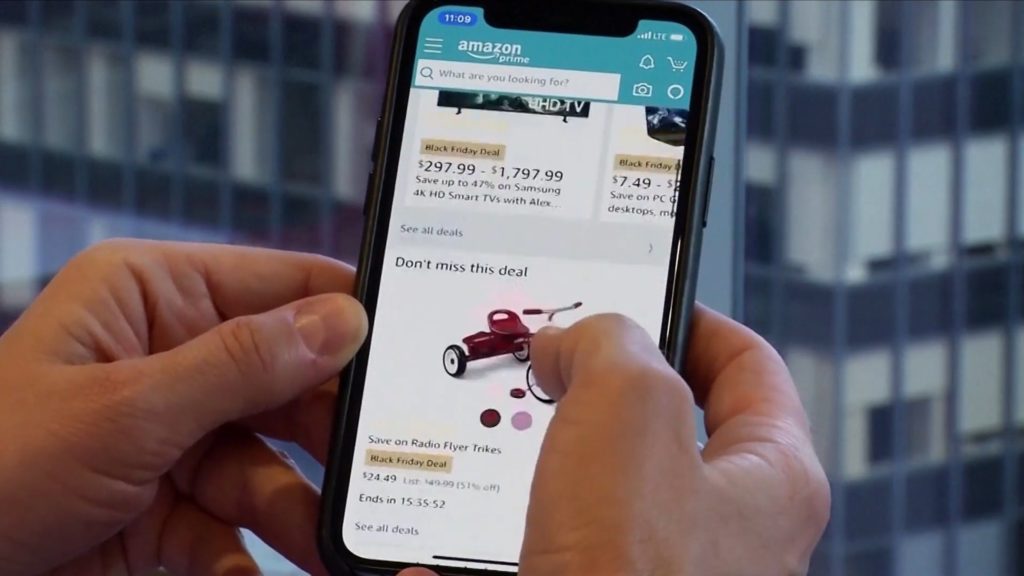
Online retailers are using AI to set individualized prices based on personal data, including age, gender, location, and browsing history, in a practice known as "surveillance pricing".
Companies like Delta Airlines, Instacart, and Home Depot have been reported to be using this practice, with some prices being 23% higher for certain customers.
The legality of surveillance pricing is unclear, with potential implications under privacy laws, civil rights laws, and Federal Trade Commission regulations, and consumers can try to protect themselves by hiding their identity while searching for prices and being aware of their privacy.

Bottom Line Up Front
AI was responsible for almost 55,000 layoffs in the U.S. in 2025, according to Challenger, Gray & Christmas.
The top firms that cited AI as part of their layoff and restructuring strategy in 2025 include Amazon, Microsoft, Salesforce, IBM, Crowdstrike, and .
These companies have cut a significant number of jobs, with Amazon cutting 14,000 corporate roles, Microsoft cutting around 15,000 jobs, and other firms making similar reductions, citing AI as a factor in their decision-making.
Things to Pay Attention to
Bottom Line Up Front
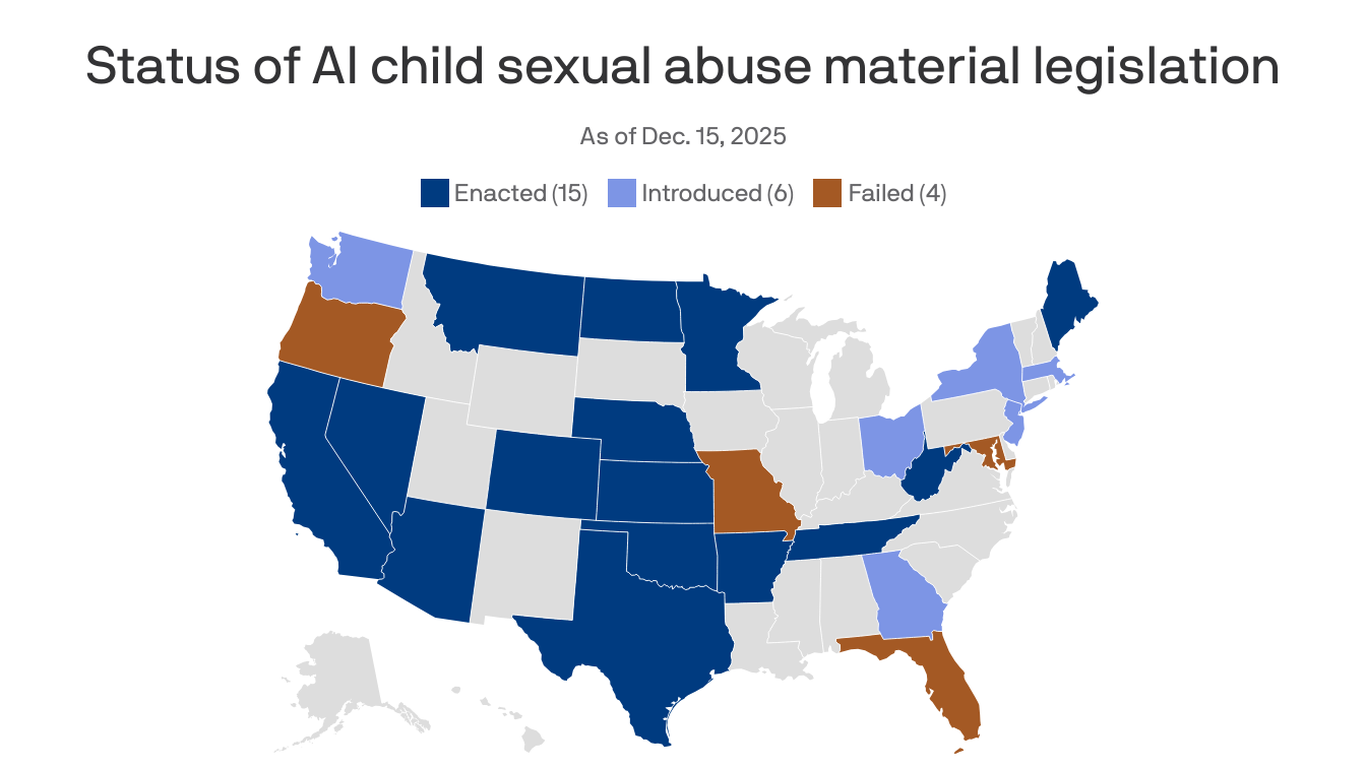
Most teens are using generative AI, with 7 in 10 using it last year, but parents and schools are struggling to keep up with guidance on how to keep kids safe.
Tech companies like OpenAI and Character.AI are starting to introduce parental controls, but more overarching policy is needed to ensure safer online experiences for kids.
Experts like Tiffany Munzer, a developmental behavioral pediatrician, are working on policies, such as the American Academy of Pediatrics' AI policy, to address concerns about kids' online safety and AI's impact on their development.

Bottom Line Up Front
The AI data center industry is experiencing a gold rush, with thousands of new players entering the market, potentially shifting dominance away from Big Tech companies like Oracle, Meta, and Alphabet.
By 2032, Big Tech's share of the world's computing power is expected to decline to less than 18%, with new firms from finance and other industries taking their place, including companies like Adriatic DC, founded by Lorenzo Avello.
The rapid growth of the industry poses risks, including the potential for an AI bubble, with some experts like Michael Burry and Charles Fitzgerald warning that many planned data centers may never be built, and others like Howard Marks cautioning about the risk of overbuild.

Bottom Line Up Front
Design for Good, a global design alliance, is embracing AI to enhance the design process, allowing designers to focus on empathy and creativity.
The alliance has partnered with AI startups Miro and OpenStudio to provide designers with collaboration tools and AI features to work more efficiently across borders and time zones.
According to Cecilia Brenner, managing director of Design for Good, and Koraldo Kajanaku, co-founder of OpenStudio, AI is a tool that can aid designers, speed up execution, and predict human health or environmental outcomes, rather than replacing human creativity.
Bottom Line Up Front
An overview of the different ways AI has developed in 2025.
People are forming close relationships with chatbots, with some users even giving them names and personalities, and interacting with them in a romantic or intimate manner.
Colleges are seeing a rise in sales of blue books as a response to the increasing use of artificial intelligence, with 90% of college students using AI tools to complete homework assignments.
The Icon School of Medicine at Mount Sinai has made Open AI's educational platform available to all of its med and graduate students, with the goal of aiding in their extensive training.
Your opinion matters! Your feedback helps me create better emails for you! Loved it 😍 😍 😍 Ok 🫤 Horrible 🤢 Got more feedback or just want to get in touch? Reply to this email and we’ll get back to you. _________________________________________________________________ Thanks for reading. Until next time! Layla and AI Strategist News Team |
|